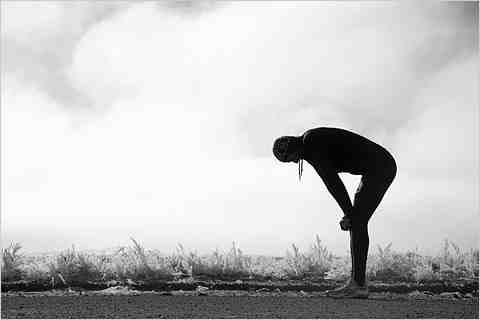
Speedwork Your way to Your best Marathon this Fall

running.competitor.com

Source: running.competitor.com

You could probably tell I’m in marathon training mode as these days it’s all about the marathon. I eat, dream, not sleep yet, talk, train, shop, everything about the marathon. Is that a runner thing or am I just obsessed? Regardless, at the very least, you get to benefit from my ramblings; I hope anyway.

Over the course of two years doing this marathon-thingy, I now know that a training regimen is necessary to complete a successful marathon, one where you can actually live the experience and not want to die and totally swear off it at the finish. I would love for you to have this experience. Thus, throughout training season, I’ll share with you my pointers on running your best 26.2.

The Magic of Speedwork

If there’s any magic at all it is in the time, effort and dedication that you put into your speed training. Now admittedly, not everyone is trying for a PR or wanting to qualify for a race, some are just happy to finish and rightly so if that’s their goal. To those, read on anyway, who doesn’t like to do anything better? We, runners, are a competitive lot and love to outdo even ourselves.  A few common speed workouts are: interval training, pace runs and hill repeats. There are many advantages to working on the speed aspect ( or short fast repeats) of your running, aside from the fact that it will improve speed and stamina thus making you a faster runner, these include:

Improvement to your running economy (the amount of oxygen consumed at a given pace) which makes it less likely that you’ll burn out and can be confident in your ability to stay the course.

Speed work develops focus and determination. The intensity of speed work requires a level of drive and ambition that will see you time and again defying your perceived limits as reps calls for either a faster pace or a higher climb.

It adds some variety to your marathon training. This avoids the common “pace rut” problem that marathoners are known to fall into as training lengthens. Also, it challenges you to faster leg turn- over.

You learn to listen to and command your body.
The human body is capable of so much but we hardly ever realize our potential as we’re all too often comfortable with just making it. Speed work asks..hell, demands of us a push that renders – I can’t – an improbability. You learn quickly that you can and do have what it takes while including recovery time to import the correct amount of stress on your body to achieve optimal performance.

Speed work, because it’s shorter and more intense, allows you to increase your running at a pace significantly faster than your marathon race pace which will make it seem much easier to do.

It teaches you discipline and commitment. These are two traits that will take you through and beyond the marathon and will help you tolerate both physical and mental discomforts while racing. When you’re between miles 17 and 23, it is your tireless attention to your speed leg-work coupled with commitment to seeing it to the end that will bring you through.

It would be remiss and downright irresponsible of me not to mention that with all the advice from coaches and the experts out there, speed work is not recommended fo the newbie marathoner and certainly not without a coach with a tried and true method. Attempting this on your own is dangerous for your health as it increases your chances of injury exponentially the closer you get to race day. You run the risk of hindering your ability to participate in the event itself and in the necessary long training runs which are so very important to completing a marathon.

When it is all said and done, you’re the one in charge of you here. You know your body and always want to do the best for you. Making wise choices can improve your performance a hundredfold. Always do so keeping in mind that there is no one-size-fits-all approach. A proper plan designed specifically for you will consider factors such as your age, genetics, running experience, ability to stay injury-free and the choice of speed workouts incorporated into your training, all of this with a realistic goal in mind.

References                                       McMillanRunning.com, MarathonTraining.com, Active.com

Marathon Training: The Long Run

runner_legs

If you’re running the TCS New York City Marathon in November or have another marathon coming up in October, like me, the experts would suggest that right about now is a good time for your first long training run. Long runs, as part of your overall marathon training, are important for a variety of reasons, but particularly to allow you to ascertain what your body can do to date. This is not your first run, tempo run, sprint or a race; it is the opportunity to engage the distance you’re running with a substitute of similar factors to bring about a simulation of what your marathon day run will be like. It can range from 18 to 22 or even 24 miles, this all depends on what your goal and your training plan is.

Here are some reasons why you need that long run:

1. Training Gauge

It’s an opportunity to test and assimilate how far you’ve come and how far you have to go in your training.

2. Builds a Race Strategy

It provides an opportunity to try out a race strategy you may want to implement on race day. For example; pacing yourself while wisely utilizing energy gels and hydration fuels on course.

3. Nuetralizes the Fear of the Unknown 
Long runs can be a form of initiation for many first-time marathoners; it eliminates the fear of the unknown, and provides a race-day simulation that incorporates distance, companionship, encouragement and motivation to the newbie marathoner when done in an official setting.

4. Prepares You Physically and Emotionally for Race Day
It builds your endurance, stamina and confidence so that you will face marathon day fully prepared and confident in your ability to run 26.2 miles.

5. Cardiovascular Enrichment
As with all forms of exercise, running more strengthens our hearts and its ability to provide oxygen-rich blood to our muscles (CompetitiveRunner.com).

6. Teaches Your Muscles to Store Glycogen                          
Long runs teaches your muscles to store more glycogen, the primary source of fuel during exercise, this is very important to avoid “hitting the wall” on marathon day.

7. Ups Your Performance    
Depending on the regularity and duration of your long run and this would depend on whose training plan you’re using, it could be an instrumental part of your training to assist with speed, endurance and strength training leading up to PR and even a possible coveted placement at the finish.

8. Helps Burns Fat as Fuel  
When your glycogen storage decreases as is the case on a long run, your body fat becomes a secondary source to provide energy for your muscles.

9. Recruits fast-twitch muscle fibers to help out in slow-twitch tasks

10. Increases Mileage and adds to Experience

Practice indeed makes perfect. The more and longer you run perfects your knowledge of your body, its capabilities and of the sport of running.

In essence, the long training run is essential to you not only running but completing your marathon. Additionally, it is good practice for general race training from 5ks to marathons and beyond as it helps to hone pace, endurance and strength skills while also building up the runner psychologically. In my humble opnion, it is the key to running your best marathon.

Why Carbs are good for your Running

Source: active.com

Source: active.com

You’ve probably heard it enough – lose the carbs, lose the weight – that you’re thinking carbohydrates is your worst enemy. Most diets and diet-fads alike support the theory that carbs contribute to weight gain when in truth it is calories and consuming more than you burn that does that. On the other hand, carbohydrates are necessary for the proper functioning of your body. In fact, The Dietary Guidelines for Americans recommend that carbohydrates make up 45% to 60% of your daily calories. So, if you get 2,000 calories a day, between 900 to 1,300 should be from carbohydrates (The Mayo Clinic).

The Power to Choose (Wisely)
The problem is that not all carbs are created equal and so, it comes down to choosing your carbs wisely. Generally, nutritionists agree with choices that include whole grains and fruits and vegetables while watching your intake of naturally occurring sugar, and restricting foods with refined gains and added sugars. Particularly for the runner though, a diet rich in carbohydrates can help maximize training and performance; emphasis should be on the kind of carbs chosen, such as whole grains, beans, fresh fruit, milk and vegetables. The benefits of whole grain to your general health and wellbeing will be the subject of a later post, but suffice to say for now, your quality of life depends on it.

Power for the Run
Carbs are the brain’s main source of energy and the body’s preferred fuel source says dietician and strength coach Marie Spano R.D., C.S.C.S. It is the primary source for producing energy for all exercise including both long distance and resistance training. It follows that if you cut carbs, your energy will drop. Spano advises that decreasing the levels of your body’s stored carbohydrates will decrease your ability to produce force and power; we know the result of that.

A Running Times article on Runners World titled “Fueling the Runner: Carbohydrates –Battling a Bad Rep” by Jackie Dikos, R.D. and 2:45 marathoner, highlight a key issue that unsuspecting runners fall prey to – fatigue. She stipulates that further investigation of such a complaint may reflect a diet lacking in carbohydrates the cause of fatigue either purposely done, as part of low carb diet, or with the runner totally in the dark as to the amount of carbs needed to perform efficiently. As already stated, our bodies prefer carbohydrates as the main fuel source when we run. But did you know that if it is not present, the body will convert fat and protein into carbs for energy. According to Dikos, this is a very inefficient form of energy for an endurance athlete. When you don’t eat enough carbohydrates and continue training, your body snowballs into a state of mental and physical fatigue.

We Determine Carbs
We see then that carbohydrates are thus fuel for runners. For running efficiently and effectively we therefore need to throw away all our misgivings, all the misinformation and misrepresentation about carbs that we’ve sucked up for so long. No low-carb or no-carb diet can do the trick of making us the runners we wish to be, our responsibility is to make healthy food choices. Balance, variety and moderation should be our watchwords.

Cool Running

Source: active.com

Source: active.com

Eighty degrees plus days are here! Whether you’re up early or running late, the challenge is to find a time that’s right for you and run with it. The life of a person with a typical nine to five job reduces opportunities for running to early morning, late evening or night and weekends. Practically speaking, who wants to engage in daytime running anyhow as it can easily get up in the hundreds and there would be no chance of keeping your cool then. Of course there’s the option of the gym and anytime running on the treadmill but there’s no fun in that. Summer calls for fresh breeze, swaying trees, the scent of a million nondescript things amidst the colorful voices of chatter and laughter and chirping and buzzing in the glow of sunrise or the aftermath of sunset.

Schedules-smedules, it really dictates your pace. For my part, I’m stuck with evenings and night-time runs; not too bad really, but for the fact that I prefer early-morning runs. For one thing, it’s way cooler then as the sun hasn’t warmed up the day as yet. It’s also perfect quiet time. If you’re aesthetically inclined then you’ll appreciate this aspect of early-morning: the quiet and solitude, the just-there fresh dew upon the ground, plants and trees, the apparent newness of the day and the clean and sharp feel to the air. There’s nothing quite like waking up to greet a day that embraces and invites you to place your mark on it. Other advantages to running at this time include: a minimal amount of traffic but a prevailing sense of safety, air pollution is at its lowest, it’s not necessary to run with fuel if you’re heading out for a short run and there’s no need for extra cover and/or sunblock. It’s an added bonus that an early- morning run opens up your appetite and leaves you feeling pumped and ready to sieze the day.

If you’re a late-evening runner like myself chances are you run into night often enough and I’m talking big-moon-starry-night. For me, that’s the best part: the stillness the night carries inspite of the traffic and noise, the scatter of city lights against the darkness, the illusion of aloneness in the city parks even with other runners on the course, the opportunity to literally run the issues of the day away juxtaposed to doing an internal review of your day and planning for the next, it’s also easier to meet-up with a running group or a buddy since most people share a nine to five schedule and running after work is pretty popular, which provides you with motivation and accountability. Of course minimal wear and minimal or no sunblock is par for the course which leaves you with the only real disadvantage being wrapping up late and getting to bed then. But after a while of doing this, your body learns and it becomes part of your routine. A heads up on hydrating during these runs since it’s still pretty warm and often humid, you need to fuel up beforehand, during and after running.

Another option for cool running in the summer is running in the rain. It’s actually a favorite of mine around this time. Lots of thunderstorms hanging around and it’s the fiercest feeling you get while running through one. Go figure..it’s you against the elements. We know who wins. Ideally if it would thunderstorm during the day, on weekends, those would make for some perfect runs but you really take it when you can get it. Afterall, our goal this Summer is simply to stay running and stay cool.

Tips for your Best Running this Summer

source:123rf.com

source:123rf.com

We’ve entered the official phrase of Summer, and without much fanfare I might add. Given the circus of a weather we’ve been having, it is no wonder. In any event, now that’s it here I encourage you to milk it for all that’s it worth and strive to derive the maximum pleasure allowed while running. Here’s how:

  • Run either early mornings before the sun rises or late evenings after it sets. While we love the sun, it’s only the extremely adventurous or crazy who run in it.
  • Wear appropriate clothing. Nothing screams newbie as  one who goes for a run in clothing made of non-breathable material in summer!
  • It follows, you should wear proper running shoes. This is a strict rule for runners, as we value staying injury-free above all else. Plus, it fits right in with that “dress for success” saying.
  • Hydrate well. Practicing proper hydration during summer is valuable not just for runners but everyone who’s concerned with pursuing good heaIth. It can determine your efficiency & effectiveness out on the track or roads as well as save you time and a hospital bill should you collapse from heat exhaustion or the like. Plus, it’s pretty affordable to keep water on hand at all times.
  • I maintain that variety is the spice of life. Mix it up a little and get adventurous in your running this summer. Why not try some trail running. Download a trail app and discover running trails in your area you never even knew existed. Something new, something different, something that will add a twist of fun to your running routine. Running during the day is an option here, as trails come with trees and lots of overhead cover.
  • Talking about variety: What’s summer without an extreme racing experience! Ever tried an obstacle race, a mud run, the Spartan experience, a color run or any one of the dozens of races geared at thrill seekers? I promise it’s a must-have experience, even if you only ever do it just one time, though I’m betting you’ll be back for more.
  • Finally, running and friends go hand in hand. Though it can have its solitary moments, running is a social sport. Runners love people and this summer is the perfect time to hook up with a running group of some kind. Hint: I’m a meet-up kinda girl myself and I’ve met some really awesome people through those groups, so here’s another opportunity to try something different. It comes with an almost money-back-guarantee you’ll be pleased with the outcome.

Summer is all about having fun and exploring new opportunities. It carries a feeling of all-that-you-can-do-before-the-good-days-are-gone; but you want to enjoy yourself and have fun doing it all. If you try a few of these, your running is sure to be fun -which is the main goal – hell, try them all and you’re sure to have your best summer of running yet. Runners honor!

Running And the Weight Factor


Source: runners world.co.za

Source: runners world.co.za

We live in a society consumed by weight, size and looks. Too often, you hear the words, “I’m too fat” spoken. And all too often you would find it incredulous the owner of those said words. Or would you?  Hardly ever will you hear someone complain about being too skinny or rather, under-weight, which is the purpose of this post.

I have always been a small-boned person and so never thought much of it in a Trinidadian culture that approved women with a more rounded figure. Later on, as first-world ideology creeped in, it became more apparant that skinny was not just cool, it was sexy. In fact, the skinnier, the sexier..say what? Exactly! It is now the aspiration of almost everyone. I mean forget health, it is the measuring rod by which society gauges whether one is cool or not.
For my part, I struggle with this weight issue in so far as it pertains to keeping it on. As a runner it has become increasingly difficult to maintain a I-feel-incredibly-healthy-weight, and so, it is a goal of mine to strive to stay within the range of my BMI (body max index). There was a time I went to the gym for the chief purpose of putting on weight; exercise, eating, even entertainment, was designed around this goal. The problem was and is that, as with any diet, it requires adherence to the plan. The truth is, I have neither the time nor inclination to eat six meals a day – a nutrition analysis showed this to be the case as I have an extremly high metabolism. In addition, it’s extremely expensive to eat healthy; I have no doubt I would be unable to sustain the cost of six meals a day for even six weeks, far less six months or longer. Between work, activities and running daily, my schedule is an endless hustle to get through my to-do
list, eating included.
I should say, I have a huge appetite for food, not snacks or junk, just food, but I’m really only in the company of food twice a day so that leaves me with a lot of meals to make up for. Thus, between time, cost and running, my weight has suffered.
While I have no problem with being skinny, my goal has always been to be healthy. In striving to attain this perfect balance, I tend to always overcompensate on my vegetable and fruit portions as I like to say it replaces snack for me. However, the truth is I just love it. I drink two of the Ensure protein drinks per day, these particularly, were made with active people in mind, and I take a Creatin supplement when training. I  also indulge in protein shakes – a passion of mine.
The struggle continues though. I think it’s getting to that place where I make an appointment to see my doctor. Maybe she can help.


In Honor of National Running Day

Source: dreamstime.com

Source: dreamstime.com

What’s the fuss? Someone asks. I respond with the very cliché, ‘If you must ask, you won’t understand.’

National Running Day: a day where runners all over this great country share their bragging rights and love for running, or for the results of running.

Like any great occasion that impacts people the world over, and thus deserves a day of recognition, honor and celebration, running gives us runners the opportunity to live it out loud; to tell the world why we indulge in the pain, the sacrifice, the dedication, the insanity of a sport that many will call torture.

We beg to differ and think that running rocks!

Here are a few reasons why:

  • It builds community and individual spirit
  • It fosters a healthy lifestyle and overall good health
  • It encourages drive and purpose
  • It provides opportunities to positively affect the lives of others
  • It develops healthy attitudes and behaviors
  • It educates, informs and facilitates personal and social development
  • It negates the racial, political, cultural and social divide and brings people of every creed and race together with a common winning goal
  • It empowers our competitive spirit and inspires our ambitions

With all the good that running does for our nation and world community, there’s a lot that we, as individuals, get from it. Here are just a few reasons why we run:

For freedom, health, strength, beauty, peace, companionship, a PR, happiness, escape, meditation, solitude, direction, purpose, charity; For causes, for those who can’t, because we can, for satisfaction, achievement, inspiration, encouragement, for the love of running, for life and a million other reasons that space and time does not permit here.

For my part, it is my happy place and I go as often as I can. So, wherever you are today, be sure to holler or high-five another runner as we celebrate the only way we know how; running of course.

Happy National Running Day!

The Skinny on Recovery Runs

Source: my treadmill trainer.com

Source: my treadmill trainer.com

You’ve heard about that post-race run that all élite athletes and those in the competitive world of running make much ado about. Sounds like it might be something to get excited about and may even be beneficial to you in some way. But what does it really mean to you the runner? Is it a have-to? Can it have bearing on your future performance and ability? What’s all the hype about? Based on my experience and the information out there, I’ll attempt to shed some light on what is quickly becoming characteristic of runners today.

By definition, a recovery run is that which you do the day after a hard workout (race, long-distance run, speed work etc.)

I haven’t always been an advocate of recovery runs, truth is for much of my running life I’ve more-often-than-not, done my thing. I believe in whatever works for you and not necessarily a one-size-fit-all approach. Granted, there are times it’s necessary to toe the line as happens with particular training techniques and smart training practices but in my opinion, we are all unique and respond differently, adapt at our own pace and acquire different skills and abilities special to us. And so I’ll never be a “Jesse Owens”  but I can be the best me if I’m willing to sift through the crud and embody what really matters.

The Experts

Elite athletes, coaches and avid runners will tell you what we all know to be true, practice makes perfect. You want to get good at something you practice hard, you want to be great, you practice harder. Coaches are big on recovery runs as they believe it enhances training leading to optimal performance and so most of their workouts are designed with this in mind, whether it’s hill repeats, sprints, interval training or others ( key workouts aimed at challenging your body to resist causes of high-intensity fatigue) are usually followed by a period dedicated to recovery. The belief here is that exposing your body to these key workouts simulate adaptations that enable you to resist fatigue better the next time (Matt Fitzgerald, competitor.com). Matt proposes that because recovery runs are gentle enough to not to create a need for additional recovery, they allow you to perform at a high level in your key workouts and therefore get the most out of them. In his words, ‘It is a way of squeezing more out of your key workouts.’ Coach Jeff in an article titled “Maximize Your Running With Planned Recovery Days” on RunnersConnect stresses that the body gets faster and stronger by breaking down muscle (hard training),and then allowing the body to build itself back up faster than before (recovery) and then repeating the process until you’re in shape and ready to race. A slightly different twist but with the same emphasis on allowing the body time to assimilate and recuperate to come back stronger.

My Experience

Two years ago, after running my first marathon, was the first time I gave any real thought to doing a recovery run. Rebel that I am, I felt I didn’t particularly need it and that since I pretty much ran all the time anyway, I had it covered. Then I ran 26.2 miles of joy and sorrow that ended with me in a boot for a month, wishing I could get out a day or two after as that discomfort would be preferable to what I then had to deal with.  See the magic in the recovery run lies in forcing you past your limits to not only embrace pain..you did that with the “hard workout” but it challenges your body to go beyond the point of fatigue, again you already achieved this; to embrace it. The run is done in an entirely fatigued state thereby boosting fitness. That is to say, you’re so doggone tired and hurting, how about 5 miles on top of that. Sounds machochist right?  Don’t worry, there’s a method to the madness; you get to slow down to an easy pace where breathing and carrying a conversation is easily done and the distance could range from anywhere between 3 to 5 miles. Plus it’s a tiny price to pay for you who see an ultra in your future.Thinking about rolling over the next time after a key workout? Think again. Your next race may depend on it.

Checking in on 2015 Running Goals; Stay Motivated

Source: truemotivation.com

Source: truemotivation.com

The daily grind can get to us. It can cause us angst and all-too-often disillusionment. That’s why I think it’s important to have constant reminders and even accountability; this helps us to maintain focus and stay motivated. Frankly, it’s all happening so fast these days, with so much of our environment, social media, the news, and just about everything else, geared toward our constant striving to stay afloat, it’s no wonder we sometimes feel overwhelmed, insecure, frustrated and dejected. The good news, if you can call it that, is you’re not alone. This fight for survival, for attainment, for our own person glory even, is not yours to fight alone. It may not sound like much, but if you can find solace in that you’ll be well on your way to getting past the first hurdle.

So you’ve taken a look back and you’re either impressed or not with the trail you’ve blazed for the past 4 1/2 months; presuming you’re pleased with what you see, then you’re pretty set for the next few months. What you’ve done has worked and I applaud your hard-work and dedication, you have a soul sister. On the other hand, we know that life can get in the way sometimes causing hiccups; know that it is ok to stop and breathe. In fact, sometimes it is necessary to do so or we risk setting ourselves up for failure. Who needs that? It is the wise person who recognizes the need to stop & reassess and sometimes reorder their goals. In that vein, you’re on the right track and would benefit from spiriting away to a quiet place, away from the clutter and noise that is your life – try a trail run outdoors, where it’s just you, nature and God – and empty your mind of everything but the moment. Revel in where you are now and be thankful. Stay there for a bit and just love yourself. You see, every now then you need to indulge in a bit of self-love, not narcissism or anything like that, but honest, real, love; only then will you be able to be real about your needs and what your plans are. This shift in focus from the worries of life and the world at large will bring you, your dreams, and your goals this year, to the forefront once more, allowing you to revise and better align your plans with your reality. That PR, Boston Qualifier, Marathon, Half-marathon, Triathlon,Iron man, Ultra, Running group, Charity run etc… whether it’s one of these or a few, is still possible. If you’ve fallen ill or something of that nature, then that’s beyond your control but if not then by God’s grace you are able.

You want to realize your desires, you have to be willing to make the necessary adjustments or/ and sacrifices. We, who know about hard-work and sacrifice, know that it will never be easy, if it were, it would not be worth it; that if we fall ten times, we stand up eleven. Failure is never an option. Indeed we have just over seven months to ensure goal realization. It is possible. You are possible.

In Running, Age is Just a Number

Sir Randulph Fiennes - Marathon des Sables 2015

Sir Randulph Fiennes – Marathon des Sables 2015

They say, “It’s not the years in your life, but the life in your years.” I think they’re right. When I look back on my years of running, while I’m no dinosaur it’s been more than twenty-five years, I can honestly say that I have never felt better, run faster, been stronger or as confident as I am today. I’ll say credit that to maturity, training and practice, but what I believe more than anything is that experience is the greatest teacher. Each race I run, I’m always looking for a better time, I constantly push myself..my boundaries, I’m always eagerly looking at new and or different methods, exploring new technologies, meeting and talking with runners. The idea here is one of openness and willingness to learn, to grow, to achieve my highest human potential.

I think about the elders in the field, I mean we’re talking those in their 70’s and 80’s, there is no game plan they’ll tell you, just passion and life and all the challenges that come with it. Recalling my first competitive 10k takes some doing but this 75 year-old Trinidadian native I will always remember: Granny Luces, as she is endearing known locally, was then a regular at the races. The race didn’t start nor end without Granny and you felt it an honor to run with her, so legendary was her passion and dedication to the sport. Today, she’s 85 and still running I’m told. Back then I use to think I wanted to be like her and I still do. I want to be 80, even 90 and still running. I recently read an article on the 71 year-old Brit who finished The Marathon De Sables 2015, a 6-day ultramarathon, raising approximately £1 million for charity. Sir Ranulph Fiennes, though he is a veteran explorer having crossed Antarctica and hiked Mount Everest, described the hair-raising experience as hell on earth. But he did it..over 150 miles..you have to give kudos to the essence of a person who at that age with his health issues would not only attempt but achieve something so monumental. Mind you, the oldest competitor in the 30-year history of the Marathon des Sables race is an 83-year-old Frenchman, so 71 might seem ok in comparison. The point is that 71, 83, 40, 23…age is just a number. How you feel mentally and physically will determine a lot more than how old you are.

Sure, I get that frailty is more than likely by the ripe old age of 80, that my bones will atrophy with time and this will surely slow down my game but I’m thinking to see this through, to take it as far as it’ll let me while doing the best I can. I think at the end of the day it’s all we can ask. I should add that longevity runs in my family, I have a grandmother who’s 102; her twin sister, my great-aunt, died last year at 101, my dad’s 93 and my mom’s 84. God bless them and me I pray. I intend to be around and running for a long time with His blessing.

Previous Older Entries Next Newer Entries

Enter your email address to follow this blog and receive notifications of new posts by email.

Join 288 other subscribers