The Tempo Run: the key to your fastest marathon

Source: strengthrunning.com

Source: strengthrunning.com

If you’re anything like me you’ve probably asked yourself a time or few what you need to do to improve your time – your 26.2 time that is – and if you have, chances are you’ve tried a thing or two and it has either worked or not-so-much. Well, since we’re always on the look-out for new and improved ways to up our running game I figure this is a must share. Elite and competitive athletes and coaches agree that the tempo run is the best indicator of your marathon time. For my part, I swear by it as a significant if not the most important aspect of half marathon and marathon training. While the long run is essential to build endurance, the tempo run is critical to racing success as it trains your body to sustain speed over distance (Former Elite Athlete and Coach, Toby Tanser)

A tempo run is a faster paced run also known as lactate-threshold (the point at which your body fatigues at a certain pace ), LT or threshold run. It is running at a hard but somewhat comfortable pace where you you can answer a question but conversing would be difficult. A classic tempo run would be running at this sustained pace for about 2-4 miles. The idea is to run hard but not going all out as though racing, you can go this way for a while but you would be happy to slow down the pace as well.

Tempo runs improve our metabolic fitness by teaching the body to use oxygen for metabolism more efficiently by increasing your lactate-threshold. Carwyn Sharp, Ph.D., an exercise scientist and marathoner claims that lactate and hydrogen ions, which are by-products of metabolism, are released into the muscles during tempo runs. These ions make the muscles acidic, leading to fatigue. It follows that the better trained you are, the higher your threshold as your muscles become better at using lactate and hydrogen ions resulting in less acid in your muscles, which keep on contracting thus allowing you to run faster.

The tempo run will vary for different runners with varying goals and differing thresholds. But the result will remain the same, a definite increase in your ability to maintain your speed over longer distances. While it seems then that the tempo run is beneficial primarily for longer runs such as a 10 miler to the marathon, as it is run somewhere between 15k and half marathon pace, the 5k runner too can benefit to a smaller degree. The key here for runners is consistency and intensity; running regularly as often as once per week during peak training time and at a consistent pace (your threshold) will improve your running and put you in the best position to run your fastest marathon.

This is going to be a key component of my training for Boston 2016. I’ve discovered in my running that boundaries are there to be pushed, obstacles to overcome and benchmarks to be reached. We will only ever know what we are capable of when we push ourselves beyond our perceived limits. I figure the tempo run is one way of discovering the dormant Kenyan in me. LOL

Reference: runnersworld.com

Cross-training: An Umph Element to your Marathon Training

Source: wiserunning.com

Source: wiserunning.com

Never one to settle for just doing it, I’m always game for doing it better. By “it” I am of course referring to running that much coveted 26.2 miles. Being a runner and a bit of a “gym girl” have had its advantages: I’m in pretty decent shape, I’m told I look way yonger than my age and I could run with many in that category too, I manage to stay pretty healthy and I keep up with on-going trends, research and data as it pertains to being fit and healthy. All of this I credit with my passion for running though I’m pretty sure my gym workouts as well as other random physical exercise have helped in shaping this 3:29:24 PR marathon girl.

What is Cross-training
That form of exercise, pertaining to runners, whereby runners train utilizing other modes of fitness training to supplement their running. For example; cycling, swimming, a fitness/aerobic class or strength training.

The Cross-Training Debate
There has been may debates of the benefits or not of cross-training for runners. Conventional wisdom says runners should run, as you perfect what you practice while there are others that argue cross-training can inmprove running performance and reduce workout boredom and burnout. Current school of thought seems to be leaning toward the way of cross training to improve the all-round performance of runners with an emphasis on low-impact workouts that complement your running without the same impact of running.

Using Cross-Training to better your marathon time
The focus of the marathoner is on increasing speed, endurance and fitness level. Cross training improves your endurance base without adding unnecessary stress on your body. It can
help you improve your race-day goal while reducing the risk of injury assosiated with intense high-impact training (Jeff Horowitz, certified personal trainer, running & triatholon coach and runner of 150 marathons across 6 continents). Jeff highlights three considerations in choosing the cross training mode that is right for you:

(1) It should be an aerobic exercise that you can engage in for hours at a time, at a moderate intensity level (at an RPE of 6-7)
(2) Is it low-impact ir no-impact? While high-impact exercises is necessary for training as it prepares ypur body for the stress of the day..you need only so much and no more or it increases your risk of injury. The idea is that lower impact workouts as identified in cross training provides you with the means of strengthening supporting muscles and lowering your risk of injury.
(3) Does this option complement your running? Aerobic cross-training will help you become a better endurance athlete, afterall you’re working with breathing, muscle-building and endurance, but to get the most out of it you need to choose a mode that works different muscle groups in support of your running, and thus becoming a more balanced, injury-resistant athlete.

What works for me
Cycling/Spin: Cycling is touted as maybe the best mode of cross-training as it complements your running training by working supporting muscle groups such as the quadriceps, which are super important in supporting the knees and are not effectively worked by running. Strengthening them can reduce the risk of knee, IT Band and patella problems.

Spin classes are something special; they encourage comraderiere, motivate, the hell out of you, kick your butt and pushes you to discover the badass within, all without the continuous pounding of the feet, providing necessary rest for the knees.

Strength Training/ Weights
Because of my small frame, I’m always mindful of weight-lifting. I can get really muscular without even trying and so I often limit my reps dependending on the muscles I’m working on to 4 sets of moderate to heavy, increasing weight as I decrease reps. Weight training is so versatile and there are so much variety to work on any one area – I tend to usually work my legs, calves & thighs together, then back and shoulders, or chest and arms and do core exercises separate; employing a yoga or pilates class to assist in this area. The benefit with weights is that you get to utilize & build muscles that are not necessarily in primary use while running, but again supports your running by providing strength & support to those secondary areas, which decreases your chances of injury and helps you develop power and ultimately your best physical self.

Swimming
As an aerobic exercise it’s on par with developing power, performance and efficiency. For my part, the focus here is on breathing and strengthening leg and arm muscles. Although I don’t go often, when I do I spend 1 & 1/2 to 2 hours in the pool, half as much time as a cycling workout as recommended by Horowitz.

Finallly, Cardio Classes
To me these are the real test of any mettle. An hour per class of constant movement: jumping, punching, swinging running, crawling and everything in between is geared to condition you into the finest athlete; build stamina, test endurance, defy limits and leave you fit and hurting and enhances and supports running training. Classes such as cardio kickboxing, mentally strips me and burns calories like crazy but it mentally and physically challenges and develops me for long term, which for me means race day.

I can’t promise that I’ve peaked or that I’m even performing at my best now, I believe that is still ahead but I continue to improve race by race so I know that I’m doing some things right most times. For the times I bum out, I remind myself that I’m a work-in-progress and I shake it off and try again – always with hope and the training as outlined above – pushing for a better race next time.

Sources: Active.com, Competitor.com, Runners World, Runnersconnect.com, Healthland.time.com

Speedwork Your way to Your best Marathon this Fall

running.competitor.com

Source: running.competitor.com

You could probably tell I’m in marathon training mode as these days it’s all about the marathon. I eat, dream, not sleep yet, talk, train, shop, everything about the marathon. Is that a runner thing or am I just obsessed? Regardless, at the very least, you get to benefit from my ramblings; I hope anyway.

Over the course of two years doing this marathon-thingy, I now know that a training regimen is necessary to complete a successful marathon, one where you can actually live the experience and not want to die and totally swear off it at the finish. I would love for you to have this experience. Thus, throughout training season, I’ll share with you my pointers on running your best 26.2.

The Magic of Speedwork

If there’s any magic at all it is in the time, effort and dedication that you put into your speed training. Now admittedly, not everyone is trying for a PR or wanting to qualify for a race, some are just happy to finish and rightly so if that’s their goal. To those, read on anyway, who doesn’t like to do anything better? We, runners, are a competitive lot and love to outdo even ourselves.  A few common speed workouts are: interval training, pace runs and hill repeats. There are many advantages to working on the speed aspect ( or short fast repeats) of your running, aside from the fact that it will improve speed and stamina thus making you a faster runner, these include:

Improvement to your running economy (the amount of oxygen consumed at a given pace) which makes it less likely that you’ll burn out and can be confident in your ability to stay the course.

Speed work develops focus and determination. The intensity of speed work requires a level of drive and ambition that will see you time and again defying your perceived limits as reps calls for either a faster pace or a higher climb.

It adds some variety to your marathon training. This avoids the common “pace rut” problem that marathoners are known to fall into as training lengthens. Also, it challenges you to faster leg turn- over.

You learn to listen to and command your body.
The human body is capable of so much but we hardly ever realize our potential as we’re all too often comfortable with just making it. Speed work asks..hell, demands of us a push that renders – I can’t – an improbability. You learn quickly that you can and do have what it takes while including recovery time to import the correct amount of stress on your body to achieve optimal performance.

Speed work, because it’s shorter and more intense, allows you to increase your running at a pace significantly faster than your marathon race pace which will make it seem much easier to do.

It teaches you discipline and commitment. These are two traits that will take you through and beyond the marathon and will help you tolerate both physical and mental discomforts while racing. When you’re between miles 17 and 23, it is your tireless attention to your speed leg-work coupled with commitment to seeing it to the end that will bring you through.

It would be remiss and downright irresponsible of me not to mention that with all the advice from coaches and the experts out there, speed work is not recommended fo the newbie marathoner and certainly not without a coach with a tried and true method. Attempting this on your own is dangerous for your health as it increases your chances of injury exponentially the closer you get to race day. You run the risk of hindering your ability to participate in the event itself and in the necessary long training runs which are so very important to completing a marathon.

When it is all said and done, you’re the one in charge of you here. You know your body and always want to do the best for you. Making wise choices can improve your performance a hundredfold. Always do so keeping in mind that there is no one-size-fits-all approach. A proper plan designed specifically for you will consider factors such as your age, genetics, running experience, ability to stay injury-free and the choice of speed workouts incorporated into your training, all of this with a realistic goal in mind.

References                                       McMillanRunning.com, MarathonTraining.com, Active.com

Marathon Training: The Long Run

runner_legs

If you’re running the TCS New York City Marathon in November or have another marathon coming up in October, like me, the experts would suggest that right about now is a good time for your first long training run. Long runs, as part of your overall marathon training, are important for a variety of reasons, but particularly to allow you to ascertain what your body can do to date. This is not your first run, tempo run, sprint or a race; it is the opportunity to engage the distance you’re running with a substitute of similar factors to bring about a simulation of what your marathon day run will be like. It can range from 18 to 22 or even 24 miles, this all depends on what your goal and your training plan is.

Here are some reasons why you need that long run:

1. Training Gauge

It’s an opportunity to test and assimilate how far you’ve come and how far you have to go in your training.

2. Builds a Race Strategy

It provides an opportunity to try out a race strategy you may want to implement on race day. For example; pacing yourself while wisely utilizing energy gels and hydration fuels on course.

3. Nuetralizes the Fear of the Unknown 
Long runs can be a form of initiation for many first-time marathoners; it eliminates the fear of the unknown, and provides a race-day simulation that incorporates distance, companionship, encouragement and motivation to the newbie marathoner when done in an official setting.

4. Prepares You Physically and Emotionally for Race Day
It builds your endurance, stamina and confidence so that you will face marathon day fully prepared and confident in your ability to run 26.2 miles.

5. Cardiovascular Enrichment
As with all forms of exercise, running more strengthens our hearts and its ability to provide oxygen-rich blood to our muscles (CompetitiveRunner.com).

6. Teaches Your Muscles to Store Glycogen                          
Long runs teaches your muscles to store more glycogen, the primary source of fuel during exercise, this is very important to avoid “hitting the wall” on marathon day.

7. Ups Your Performance    
Depending on the regularity and duration of your long run and this would depend on whose training plan you’re using, it could be an instrumental part of your training to assist with speed, endurance and strength training leading up to PR and even a possible coveted placement at the finish.

8. Helps Burns Fat as Fuel  
When your glycogen storage decreases as is the case on a long run, your body fat becomes a secondary source to provide energy for your muscles.

9. Recruits fast-twitch muscle fibers to help out in slow-twitch tasks

10. Increases Mileage and adds to Experience

Practice indeed makes perfect. The more and longer you run perfects your knowledge of your body, its capabilities and of the sport of running.

In essence, the long training run is essential to you not only running but completing your marathon. Additionally, it is good practice for general race training from 5ks to marathons and beyond as it helps to hone pace, endurance and strength skills while also building up the runner psychologically. In my humble opnion, it is the key to running your best marathon.

The Skinny on Recovery Runs

Source: my treadmill trainer.com

Source: my treadmill trainer.com

You’ve heard about that post-race run that all élite athletes and those in the competitive world of running make much ado about. Sounds like it might be something to get excited about and may even be beneficial to you in some way. But what does it really mean to you the runner? Is it a have-to? Can it have bearing on your future performance and ability? What’s all the hype about? Based on my experience and the information out there, I’ll attempt to shed some light on what is quickly becoming characteristic of runners today.

By definition, a recovery run is that which you do the day after a hard workout (race, long-distance run, speed work etc.)

I haven’t always been an advocate of recovery runs, truth is for much of my running life I’ve more-often-than-not, done my thing. I believe in whatever works for you and not necessarily a one-size-fit-all approach. Granted, there are times it’s necessary to toe the line as happens with particular training techniques and smart training practices but in my opinion, we are all unique and respond differently, adapt at our own pace and acquire different skills and abilities special to us. And so I’ll never be a “Jesse Owens”  but I can be the best me if I’m willing to sift through the crud and embody what really matters.

The Experts

Elite athletes, coaches and avid runners will tell you what we all know to be true, practice makes perfect. You want to get good at something you practice hard, you want to be great, you practice harder. Coaches are big on recovery runs as they believe it enhances training leading to optimal performance and so most of their workouts are designed with this in mind, whether it’s hill repeats, sprints, interval training or others ( key workouts aimed at challenging your body to resist causes of high-intensity fatigue) are usually followed by a period dedicated to recovery. The belief here is that exposing your body to these key workouts simulate adaptations that enable you to resist fatigue better the next time (Matt Fitzgerald, competitor.com). Matt proposes that because recovery runs are gentle enough to not to create a need for additional recovery, they allow you to perform at a high level in your key workouts and therefore get the most out of them. In his words, ‘It is a way of squeezing more out of your key workouts.’ Coach Jeff in an article titled “Maximize Your Running With Planned Recovery Days” on RunnersConnect stresses that the body gets faster and stronger by breaking down muscle (hard training),and then allowing the body to build itself back up faster than before (recovery) and then repeating the process until you’re in shape and ready to race. A slightly different twist but with the same emphasis on allowing the body time to assimilate and recuperate to come back stronger.

My Experience

Two years ago, after running my first marathon, was the first time I gave any real thought to doing a recovery run. Rebel that I am, I felt I didn’t particularly need it and that since I pretty much ran all the time anyway, I had it covered. Then I ran 26.2 miles of joy and sorrow that ended with me in a boot for a month, wishing I could get out a day or two after as that discomfort would be preferable to what I then had to deal with.  See the magic in the recovery run lies in forcing you past your limits to not only embrace pain..you did that with the “hard workout” but it challenges your body to go beyond the point of fatigue, again you already achieved this; to embrace it. The run is done in an entirely fatigued state thereby boosting fitness. That is to say, you’re so doggone tired and hurting, how about 5 miles on top of that. Sounds machochist right?  Don’t worry, there’s a method to the madness; you get to slow down to an easy pace where breathing and carrying a conversation is easily done and the distance could range from anywhere between 3 to 5 miles. Plus it’s a tiny price to pay for you who see an ultra in your future.Thinking about rolling over the next time after a key workout? Think again. Your next race may depend on it.

Up Your Running With Speed Training

Source: Runners World

Source: Runners World

You may have the idea of a PR in an upcoming race or it may even be among your goals for this year, don’t give up. It is doable. Runners are a competitive lot never quite satisfied with the average run, maybe it’s the stuff we’re made of, but somewhere inside there is always the thought of a better run. We go the distance and do whatever it takes to increase our speed and improve performance. With this in mind, it’s been my personal experience, in addition to all the information out there, that incorporating speed work into training for a race could change the dynamics of your racing and help you achieve the results you want.

Speed Workouts are structured workouts that include running specific intervals or time or distance at a specific pace. Research and a lot of coaches agree that it builds endurance, strengthens legs and lung muscles, burns more calories,increases speed, and adds variety to your workouts. I particularly like going to the track to do speedwork as it’s easier on the knees and the distance is already worked in. Here I share a few that I use regularly.

Fartleks

These are timed distances at a specific pace, generally fast, with a slower recovery period. You can incorporate as many reps as you want to maximize your workout but should stick to doing these once per week. Eg. 6 reps of2 mins on, 1 min off at 5k pace.

Interval Runs

Short intense running followed by equal or longer recovery periods. Here the focus is on reaching hard, above your red line or limit so that you’re really counting the minutes until you stop. Recovery takes the form of a jog where you can really regain your strength to go full steam ahead again. Eg. 2 mins hard running, followed by 4 mins of easy jogging.

Sprints

High intensity workouts that can take the form of super-quick repeats, hill repeats, downhills and ladder workouts. Each of these are short and fast with distances ranging from 40 meters to 200 meters depending on which one you’re doing. Eg. Super-Quick Repeats: 8×200 meters for 30 to 40 seconds each and a recovery time of 2 mins. With Hill Repeats and Downhills the run is on the hill for the distance decided, say 20 yards uphill and 100 meters down x8, varying the intensity of the run on the basis of your max effort-starting at 70%- and a recovery time of 2 mins. With Ladder workouts, you increase the distance after each rep and retrace your steps and work your way back down, decreasing your recovery time after each rep.

The stats on these workouts can change to suit you ability, but no matter which you decide, remember to give yourself time to warm up to avoid injury. Warm up times may vary from 15 mins of running to 2 miles depending on the intensity of the workout.

Some Fun Spring Runs

Source: Precor.com

              Source: Precor.com

After a long, cold Winter you deserve some fun. And I’m not talking laying-under-a-beach-with-an-umbrella-drink type of fun, heck no, we’re not sedentary like that. I’m talking body painting-mud covering-rock climbing, kinda running fun. Don’t mind if we celebrate everything with a run, we don’t know any other way. It’s just too darn bad that some of us are still experiencing winter-type air but for the rest of us, there’s nothing like a crazy, adrenaline-pumping, butt-kicking running adventure for Spring initiation. Never mind the rains we’ve been promised, plan on getting soaked anyway with all the sweat and grime that’s coming your way.

I did some digging and scored what I think are some of the best fun runs around the country – only because I think hopping around adds more adventure and fun and you get to meet runners. Here’s hoping these 10 suggestions help to kick off Spring and get you on your way to earning a bad-ass runner reputation.

1. The Original Mud Run – DFW Spring 2015, Bear Creek Road, Lancaster TX 4/04/2015
This race boasts three courses: 5k fun run, 10k fun run and 10k competition and a new Apex 200 yard – Super Obstacle Course (competition only). All courses are Military Style Obstacle Courses and boots and loose-fitting cargo or sweat pants are mandatory for competition categories while recommended for non-competition runs where crazy costumes are also welcomed.

2. Mud on the Mountain – Seven Springs,Pennsylvania 5/09/2015
A 7-mile mud run through some of the most challenging terrain in Pennsylvania traversing ponds, scaling boulder fields, climbing over obstacles and clawing up impossible inclines to a triumphant finish.

3. Savage Race – Georgia Spring 2015, Dallas, GA 4/18/2015
An intense 5 miles, 25 obstacles on rolling hills and rocky terrain to include mud, fire and barbed wire. Run individually or as part of a team.

4. Spartan Race – Tri-State New Jersey Beast 4/18/2015
A distance of 12-14 miles over New Jersey’s Mountain Creek with steep inclines and rocky track descents. Athletes are asked to carry a headlamp & water supply in a camelback or similar type pack as the average finish time is 5+ hours. Teams are encouraged but there is also individual registration.

5. Spartan Race – Citi Field, NY Sprint (Stadium) 5/09/2015
3 miles of throwing, jumping, crawling and grueling climbing will take you to the remotest corners and every level of this ball park.

6. Virginia Rugged Maniac – spring 2015 Petersburg, VA 5/02/2015
A 3.1-mile run averaging 30-60 minutes with 25 obstacles the likes of 12′ high walls and 50′ water slides while running, crawling and jumping through a combination of forests, fields, motocross tracks and ski slopes.

7. Ultimate Challenge Mud Run – Columbia, SC 4/11/2015
Run 36 military style obstacles spread over 6.2 miles with Marines to “motivate” your team at each one. This is a team event only challenging you both physically and mentally through mud, water, and over obstacles just like veterans do in training. Obstacles are built with the same materials and techniques as used in military training courses around the world.

8. The Color Run – Camden Waterfront, Philadelphia, PA 4/25/2015
Dubbed “the happiest 5k on the planet” this run is designed to uplift and inspire runners to shine and live in a happy healthy way. Get ready to do that with special sparkle/ glittery attractions on the course, new shine elements at the finish and paint of course.

9. Virginia Wine Country Half Marathon – Loudon County, VA 5/30/2015
Who needs mud when you have wine. The race starts and finishes at Doukenie Winery, with post-race access to the Wine & Music Festival. This scenic, grape-scented course runs north of the winery on historic byways, passing vineyards, farms, ranches and estates along the way. Midway is your water and wine stop.

10. Barkin’ Dog Duathalon – Denver, CO 5/30/2015
The largest duathalon in Colorado and a popular run-bike-run race, this race has two distances participants can choose from: a 1.2-mile run, 18k bike, and 5k run or a 5k run, 34k bike, and 5k run as they transverse the trails and roads through Cherry Creek State Park. Enjoy a post-race picnic and the 4200 acres of the park upon finishing.

Of course there are a lot more going on this spring, hundreds of mud runs and obstacle races in each state through the end of the year actually, and sometimes multiple in any given state, at various locations. The point is that there are so many races and so much fun to be had, it would be a tragedy to let it all slip away without stepping out and grabbing as much as you can. Another positive is that these races have a charity component and so you could always do good while you’re having fun. Enjoy Spring!

The United NYC Half Marathon: miles for a cause

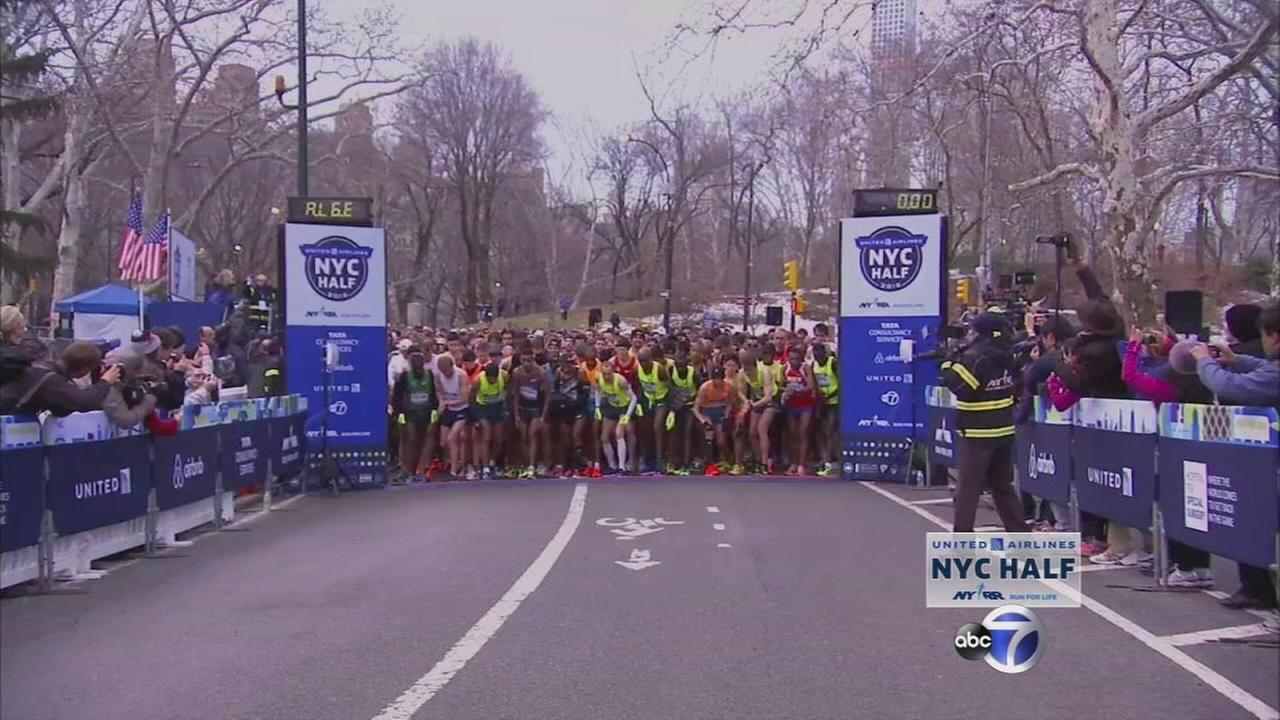
United NYC Half Marathon Start Source: ABC online

United NYC Half Marathon Start
Source: ABC online

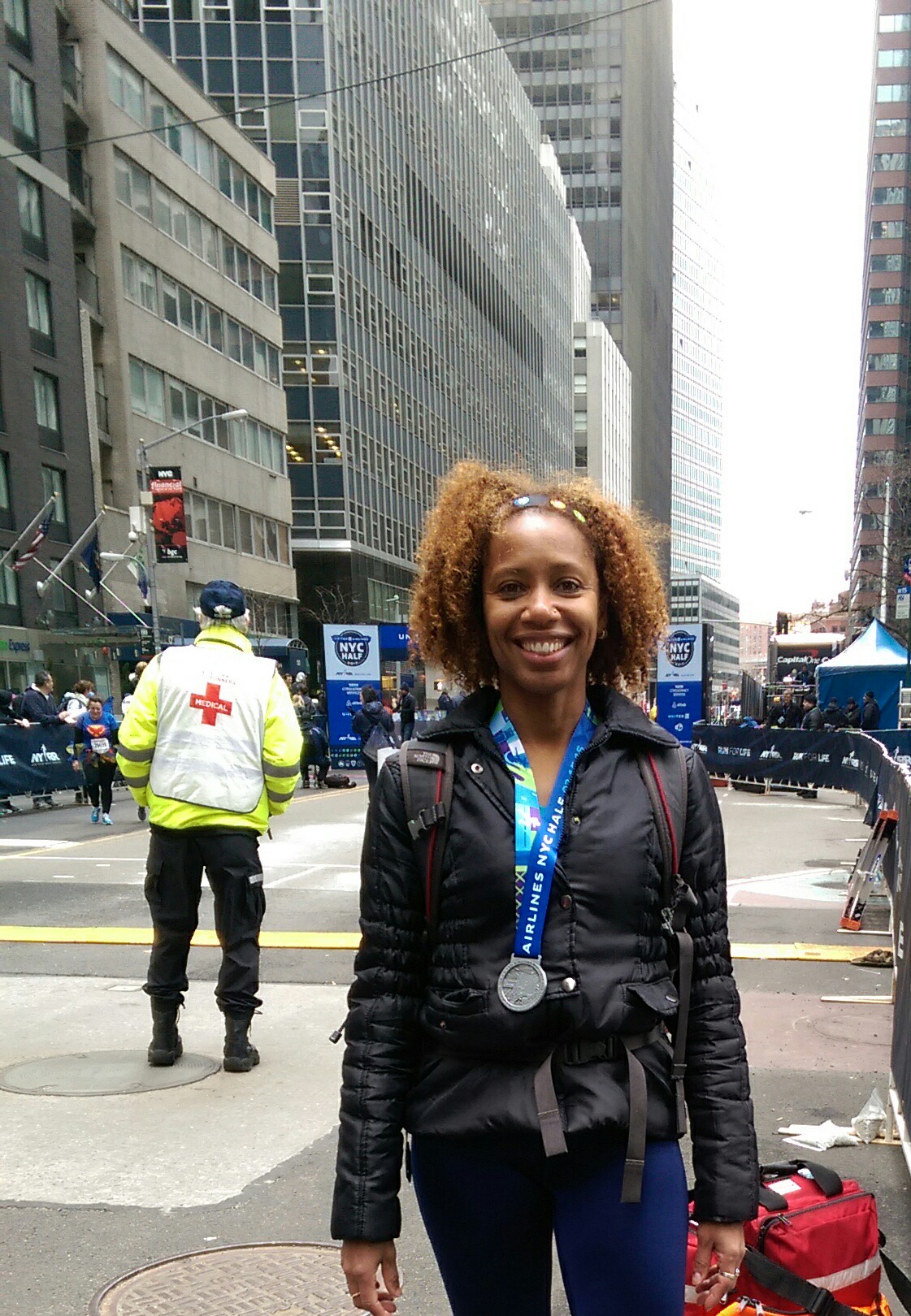
Last Sunday was my “miles for a cause” run, the first that I’ve run based on my fundraising efforts with 100% proceeds going to a youth charity. For this reason alone, it was a phenomenal success.  We, my donors and I, were able to successfully raise $1225.00 in just about six weeks with the limit being $1000.00.  I am tremendously pleased and humbled by the support and love shown by everyone for The Seed Project, an organization that provides sport and education scholarships for students in Senegal, West Africa, for which I chose to run. Words are insufficient to impress the positivity and good that will result in the lives that were touched by our efforts. Thus, I’m inspired to continue impacting lives one step at a time, with the hope that it will encourage others to make a difference doing what they love.

Secondary to my fundraising goal was my wish to run a PR, which didn’t happen much to my disappointment.  The NYC Half Marathon is run with much fanfare and spirit: lots of runners, spectators, media hype and excitement; sort of like its bigger counterpart, the NYC Marathon, only on a smaller scale.  With a field size of around 20,000, it’s not hard to see why.  Like the marathon, there are runners from all over the world, dozens of charities to choose from and it delivers a spectacle course. From Central Park to Times Square, then running along the West Side Highway to the heart of the financial district in lower Manhattan, it’s NYC 101, and impossible not to get caught up in the excitement of it all. Also, it’s not everyday one gets to stop traffic in Times Square with the hope of getting caught on the big screen.  I dare say that is the highlight of the race for many, that, and collecting the finisher’s medal.

Secondary to my fundraising goal was my wish to run a PR, which didn’t happen much to my disappointment. While it wasn’t a particularly difficult course, there were some, what I call, challenging moments: the hills in Central Park and the 4-mile stretch of the Westside Highway presented the most challenge and while I could factor in a number of reasons why this was so, I’ll just focus on adjusting my strategy for another race of this length. That being said, I finished in 1:38 while we enjoyed great weather during the run and I couldn’t help recalling the last time I ran that race in 2013, it was a freezing 18 degrees. However, at the finish it got quite chilly as the winds picked up and it turned out to be a very cold day from then on and I could only feel for those runners that were still on the course. I ended the day hanging out with the fundraising team at an after party hosted by the organizers in the seaport area. I really couldn’t be happier with my efforts..well maybe with my time..but I’ll gladly accept that to be able to give those kids in Senegal a better chance at life.

IMAG1228~2

Carpe Diem: Run with It

Source: blulabelbungalow.com

Source: blulabelbungalow.com

“Life is often compared to a marathon, but I think it is more like being a sprinter; long stretches of hard work punctuated by brief moments in which we are given the opportunity to perform at our best.”
-Michael Johnson

What a difference a week makes! From banks of snow and tunnels of cold air to kisses of sunshine and the keen almost-there scent of glorious Spring. Admittedly, there are still traces of snow on the ground but the rain is doing its thing, so am I, and so should you; which brings me to outdoor running and races. With the advent of Spring, there is a lot of running going on in these parts, and forgive me for being an overly enthusiastic runner, but, I am once again super-excited to be living in the running capital of the world.

Living in New York affords one the year-round opportunity for running, though I try to pretend otherwise when winter comes around. However, that is only for self-preservation as there are countless runners who brave the chill and ice to religiously get their daily runs in. Don’t ask me how or why, as the couple of times that I’ve given in and done so have left me convinced that it is not for me. In a perfect world, there are ten months of Summer, one month of Spring and one of Fall; no worries. Winter aside, it’s time to put your game face on. I’m so into what’s ahead that I’ve had a few shopping sprees specifically dedicated to running gear; nothing like new shoes, leggings and racer backs to get you into a total running frame of mind.

To get things going, I’m looking for a PR on Sunday at the United Airlines NYC Half Marathon. The weather looks promising, I feel fantastic as I’m revelling in racer-mode, only possible with a half marathon or less, the course is awesome -#TimeSquare- and so I expect great things to propel me into next month’s New Jersey marathon. Did I mention that I’m looking for a faster qualifying time for Boston 2016? That’s my next goal in the next race. Stay tuned for more on that. Till next week, seize these beautiful running days!

Deconstructing The Marathon

how-to-run-a-marathon-finish-it-and-live-to-tell-the-taleEver wondered why 26.2 miles is the standard by which most runners measure their ability? What is it about this race that captures our imagination and incites a ridiculous passion within that causes to us to defy everyday expectation? Why do we seek to stretch ourselves beyond average human endurance to achieve a moment of glory to which we come back to time and time again?

I submit it is the intrinsic desire of every person, runner and non-runner alike, to matter; to live a life of meaning where what we do matters to someone in some way. It gives our lives purpose and direction and motivates us to put our best foot forward in spite of the challenges we face. The Marathon for many runners is a benchmark by which we judge our performance, our competitiveness and even certain aspects of our character such as perseverance and tenacity. Often, it becomes “The Challenge” that is the driving force behind our careers, our passion, our purpose and/or our life’s mission.

Running, I’ve always maintained, is a natural ability that we are all born with, some more so than others. While the advent of time and the changes in pop culture have surely impacted our desires, it has no more made a runner of you than it has me. We’ve always ran to some degree, some are just no longer satisfied with the average 6-13 miles. For most of us who’ve honed and sharpened our skills, a half marathon is no longer enough to satiate our hunger for more challenge, more adventure, more competition – even if we’re competing with ourselves. It’s now a warm up. Mind you, it didn’t start out that way. We have graduated to a secure place in our running from 5 mile short runs to 10 mile tempo runs to 13-15 mile training runs to 18-20 mile long runs to where 26.2 is now “The Run.”

Running a marathon is a dream, goal or, bucket list event for many runners. The actual race however, is no easy feat. No one gets up one day and decides to run a marathon, it involves lots of training and racing prior to “The Run.” While it is a challenge; hardwork, sacrifice, commitment, and perseverance, it is doable. As is often said, the man with a plan can. This is true for many things but it is especially so for running a marathon. A plan is needed for training and for race day. In previous posts I have discussed both butI want to reiterate how important it is to have a race strategy. Obviously, we cannot know exactly what will go down on that day but knowing how you intend to tackle the challenge it is will make for a better run.

The Marathon is easier run in parts. By this I mean that it appears more doable if it’s broken up into segments. The first 5 miles is pretty easy running -nothing we haven’t done time and again – running at a steady easy pace, it can be looked at as your warm up. Miles 6 through 12 takes us into training mode, we have been here; it’s comfortable and so we can up the ante some bringing us up to miles 13-18. Here is where we begin to feel our leg muscles working, pushing, reaching, stretching. Every part is now working in unison; legs pounding, arms pumping, in and out we breathe taking us further and a tad bit faster through to miles 19 through 24. Here the challenge is real to focus on the finish line, the medal, that moment of glory over the pressure to slack off and ease up just a little. Muscles are oftentimes screaming at this point because its breaking down. All the extra cross strength training comes into play here to give the extra push fueling those muscles and propelling you forward into the final leg. The final 2.6 miles is strictly mental. Pain, discomfort, exhaustion exists somewhere on the periphery of reality, one that is filled with the sounds of cheers and shouts of encouragement. You dig in for that reserve of strength and speed that was awaiting this moment.. here it comes.. You can see it now, taste it even, the roar of the crowds give wings to your feet and you’re in. You did it. Aside from the chunk of metal hanging around your neck, take a breath and a minute to absorb it all. This, right here, is why you’ll be back soon.

images (7)

Previous Older Entries Next Newer Entries

Enter your email address to follow this blog and receive notifications of new posts by email.

Join 288 other subscribers